


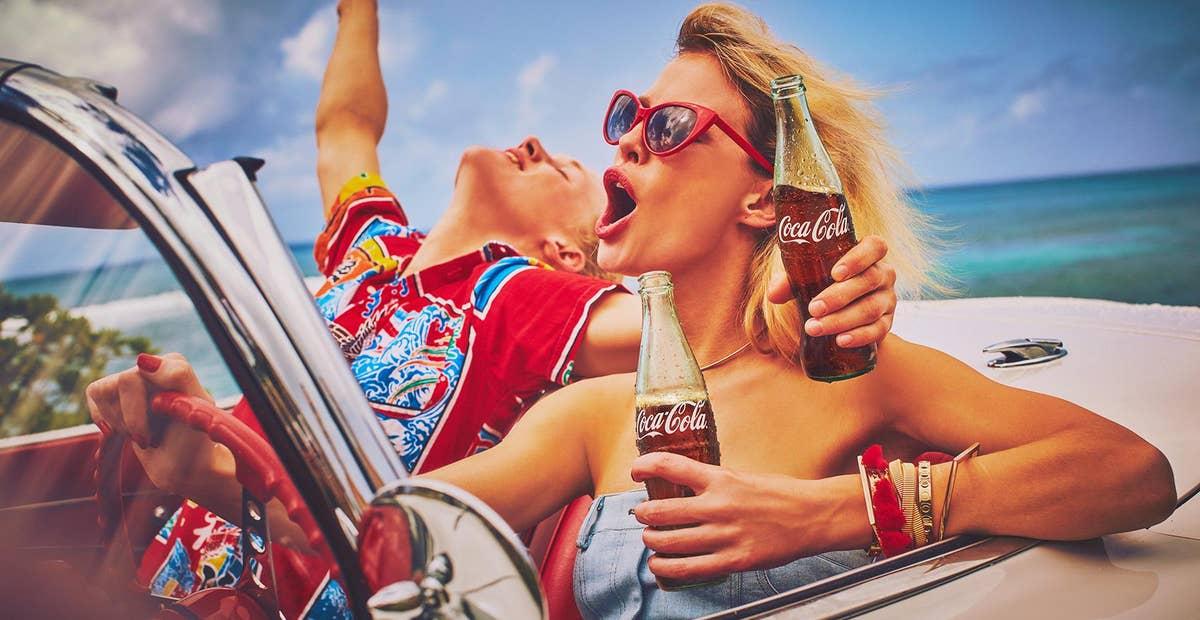
Coca-Cola sells a syrup-and-water mix that costs pennies to make. Yet it's one of the most valuable brands on the planet, and people will pay a premium for it over a chemically near-identical store-brand cola sitting on the same shelf. That gap between what's in the can and what people will pay for it is the whole story of positioning. Here's how Coca-Cola built it, defended it, and nearly threw it away.
Key Takeaways
- Coca-Cola positions on an emotion (happiness and connection), not on taste or any product feature.
- "The original" is the single word it owns, and protecting that word is the whole strategy.
- It targets moments, not demographics, which is why a near-universal audience actually works.
- Pepsi won blind taste tests and still lost the market, proving brands live in the mind, not on the tongue.
- The 1985 New Coke disaster shows what happens when you optimize the product but break the promise.
What is Coca-Cola's brand positioning?
In one sentence: Coca-Cola positions itself as the original, the authentic article that turns ordinary moments into shared happiness.
Notice what's missing there. Nothing about taste. Nothing about caffeine, carbonation, or thirst. The functional product is almost beside the point. What Coca-Cola actually owns in your head is a feeling, and it has guarded that feeling for more than a century.
The emotional promise is connection. A Coke shows up at the barbecue, the road trip, the holiday table. The brand attached itself to togetherness so thoroughly that at its core, Coca-Cola isn't just a drink, it's a global symbol of happiness, celebration, and timeless appeal.
The functional promise comes second and it's deliberately modest: refreshment, consistency, the same taste in 200 countries. That reliability matters, but it's the floor, not the ceiling. Plenty of drinks are refreshing. Only one owns "happiness."
This distinction is the foundation of any real brand strategy, and it's where most businesses get positioning wrong.
What is Coca-Cola's positioning statement?
Coca-Cola has never published a single official positioning statement, but its strategy is fairly easy to reconstruct from how it actually operates. A faithful version reads:
For people everywhere seeking a moment of happiness and connection, Coca-Cola is the original sparkling beverage that refreshes the body and lifts the spirit, because no other brand has spent 130 years making itself part of life's shared moments.
Each piece does work. "For people everywhere" signals the deliberately massive audience. "A moment of happiness and connection" is the emotional core. "The original" is the single most valuable word Coca-Cola owns, and you'll see in a minute how much trouble the company caused itself by forgetting that.
What makes the statement strong is restraint. It claims one idea and defends it relentlessly. As the company's own growth strategy puts it, great marketing begins with human insights and telling a brand's story in a relatable way. The brand resists the temptation to be about everything, which is exactly why people remember what it's about.
Who is Coca-Cola's target audience?
Coca-Cola breaks a rule we usually preach. We tell clients to narrow their audience, and Coca-Cola targets nearly everyone. So why does it work for them and fail for almost everybody else?
Because Coca-Cola doesn't segment by who you are. It segments by moment. Instead of targeting by demographics alone, Coca-Cola segments based on lifestyle, behavior, and context, with campaigns designed around emotions, shared rituals, and personal moments. The teenager and the grandparent both buy into "this is part of a good moment," even though the moments differ.
It also runs distinct products for distinct needs without diluting the master brand: Diet Coke for the calorie-conscious, premium lines like fairlife and smartwater for the health-leaning crowd. The flagship stays pure while the portfolio does the segmenting.
The honest caveat for your business is that this only works because Coca-Cola spent a century and billions of dollars earning universal mental real estate. You almost certainly can't out-broad them. The lesson isn't "target everyone." It's "own a moment so well that everyone who's in that moment thinks of you."
How does Coca-Cola differ from Pepsi?
This is the most instructive rivalry in marketing, because Pepsi proved a brand can win on taste and still lose on positioning.
Pepsi positioned itself as the challenger, the choice of youth. Its theme of "the choice of a new generation" worked, cutting Coke's lead in half. Smart move for a number two: go against what the leader stands for. If Coke is the original, paint it as old.
Coca-Cola's territory is heritage, authenticity, timelessness. Pepsi's is energy, youth, the new. Same brown liquid, opposite emotional addresses. Pepsi's voice is louder and more pop-culture-driven; Coca-Cola's is warmer and more nostalgic.
And here's the kicker for anyone who thinks the better product wins. In blind taste tests, including Coca-Cola's own internal ones, consumers preferred the flavor of Pepsi. Coke was losing on taste and still winning the market, because the brand lives in the mind, not on the tongue. That gap is the entire case for brand differentiation over product features.
What can the New Coke disaster teach your brand?
In 1985, rattled by the Pepsi Challenge, Coca-Cola did the unthinkable. It changed the formula and launched "New Coke." The backlash was instant and ferocious. The company reportedly received over 1,500 complaint calls per day, and just 79 days after launch, it brought back the original as "Coca-Cola Classic."
Here's the part most people miss. The new formula won the taste tests. People liked how it tasted. They revolted anyway. As branding lore has it, products are created in the factory, but brands are created in the mind, and Coke learned this the hard way.
The real failure was a positioning failure. Coca-Cola owned the word "original." If you tell the world you're the real thing, you can't come up with a new real thing. A brand can only stand for one cohesive idea, and Coke undermined its own position. The company optimized the product and broke the promise.
The deeper lesson, sharper than the usual "don't mess with a classic," is about the limits of data. Coca-Cola listened to consumers, but only to what could be measured quickly, and missed the intangible weight of memory, ritual, and trust. Your customers' relationship with you lives partly in things a survey can't capture.
So what should your brand take from 130 years of Coca-Cola?
Own an emotion, not a feature, because features get copied and emotions get defended. Pick the one word you want to own and protect it like Coca-Cola protects "original." And remember that the product lives in the factory while the brand lives in the customer's head, which means you don't get to unilaterally decide what your brand means. Your customers do. Finding the single idea your business should own is exactly what a brand story is built to uncover.


