


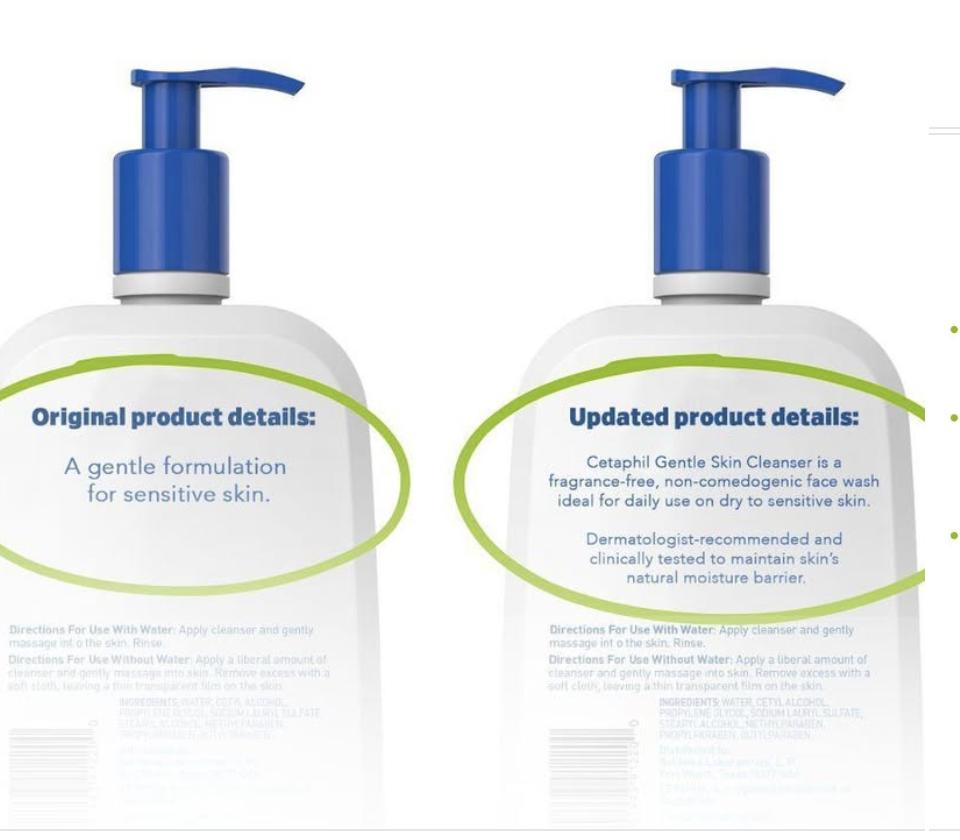
If you’ve recently searched for a skincare product using ChatGPT, you may have noticed something subtle but strategic in the results. Cetaphil, a legacy brand best known for its gentle cleansers and dermatologist-recommended formulas, has quietly updated its product language—not just for Google, but for AI-based search platforms.
Instead of focusing solely on traditional SEO keywords, Cetaphil’s product descriptions now include phrasing and structure tailored to how people interact with generative AI tools. The brand is meeting consumers where they’re headed: search results generated by models like ChatGPT, Perplexity, or Claude. And it’s a smart move.
What’s Changing?
Historically, SEO strategy was about targeting keywords and ranking in Google search. Today, people are just as likely to ask an AI assistant what the best face wash is for sensitive skin or to list top dermatologist-recommended moisturizers. When they do, the language in product listings plays a much larger role in whether or not a brand is surfaced in the response.
Cetaphil’s revised language does something traditional SEO never required: it speaks in full, conversational phrases that mirror how real people ask for recommendations. Phrases like “best cleanser for sensitive skin recommended by dermatologists” or “non-irritating moisturizer with long-lasting hydration” are more AI-friendly than old-school, fragmented SEO tags.
The Bigger Implication for Brands
This isn’t just a skincare trend—it’s a signal to all brand marketers. AI-based search is becoming a powerful decision-making tool, especially for categories like beauty, wellness, and home goods where consumers rely heavily on product comparisons and social proof.
We’re seeing the early stages of a new kind of optimization. It’s not about bidding on high-intent keywords. It’s about anticipating how a user might phrase a question to an AI and ensuring your brand fits into that answer naturally and authoritatively.
Our Take
For brands and agencies, this means rethinking how we write product descriptions, landing pages, and even campaign copy. Instead of writing for search engines, we need to write through the lens of real human queries. Natural language, clear benefits, and structured information win.
It’s also a call for content and SEO teams to collaborate more closely with creative and strategy. A beautiful brand voice and smart storytelling still matter. But if your copy can’t be understood—or surfaced—by an AI assistant, you're missing out on a fast-growing share of consumer discovery.
Cetaphil may be early, but they won’t be alone for long. Brands that evolve their content strategy now will have a head start in shaping the AI search shelf of the future.


