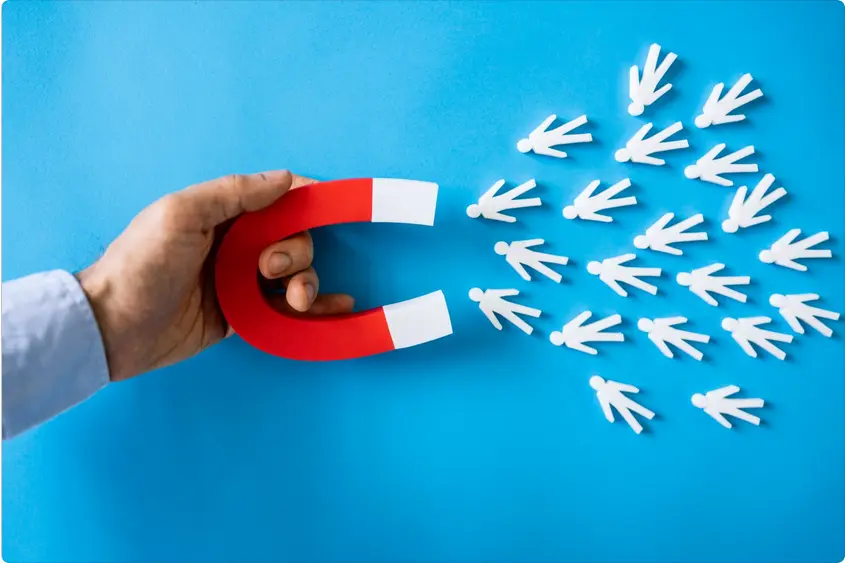
Most businesses pick a lane. They either flood the top of the funnel with content and wonder why nothing converts, or they go straight for the close and skip the relationship-building entirely. Both approaches leak revenue.
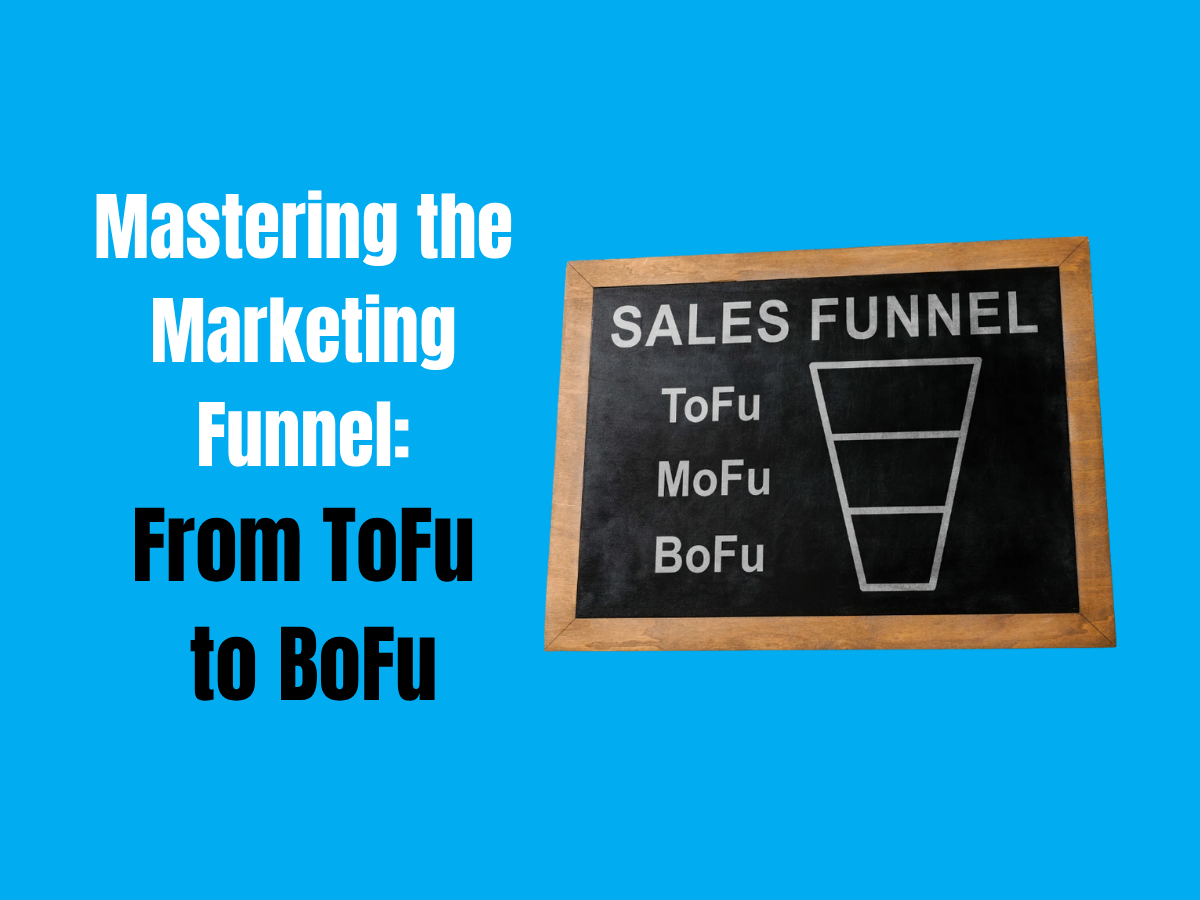
Here's the thing: the funnel isn't complicated. It's a framework that maps the full customer journey from the moment someone first discovers your brand to the moment they buy. Top of funnel. Middle of funnel. Bottom of funnel. Each stage has a different audience mindset, a different job to do, and a different set of tactics that move people forward.
But here's what most funnel guides leave out: the tactics only work when the brand behind them is consistent. A prospect who sees shifting messaging, a different tone, or a mismatched visual experience at each stage doesn't just get confused. They lose trust. And lost trust doesn't convert.
What Is the Marketing Funnel?
The funnel shape is intentional. A wide pool of potential customers enters at the top, and a smaller group converts at the bottom. This narrowing is natural. Few people who discover your brand are ready to buy, and fewer still will follow through on consideration alone.
The journey isn't always linear, either. Prospects research, get distracted, compare alternatives, and re-engage weeks later. The funnel doesn't map every variation in that path, but it gives you a reliable structure to build from: awareness at the top, consideration in the middle, conversion at the bottom.
What holds all three stages together is a consistent brand.
The voice, visuals, messaging, and values a prospect encounters on day one should match what they see on day 30 when they're ready to make a decision. Without that thread, your funnel has holes in it — and you won't always know where the leads are falling through.
Top of Funnel (TOFU) — Building Awareness
Top of funnel marketing is about reach, and only reach. Prospects at this stage aren't shopping yet.
Instead, they're searching, scrolling, or stumbling across content while trying to understand a problem they have. They may not know your brand exists. They're definitely not ready to hear a sales pitch.
Your job at the TOFU stage is visibility and first impressions. You're not closing anyone. You're showing up in the right places, saying something worth reading, and giving a new audience a reason to come back.
Tactics for Top of Funnel Marketing
- SEO-driven blog content targeting informational search queries, built to answer what your audience is already searching for
- Organic and paid social media content designed to expand reach and spark engagement
- Short-form video, YouTube content, and podcast appearances that introduce your brand to cold audiences
- Thought leadership placements and influencer partnerships that borrow credibility from voices your audience already trusts
Brand Consistency at TOFU
The impression your brand makes at the top of the funnel becomes the baseline every future touchpoint gets measured against. Think of this as “brand memory.” A prospect who reads a sharp, well-crafted blog post will carry that perception forward. If your social presence feels like a different company, or your ad copy doesn't sound like the article that sent them there, the credibility gap opens immediately.
Brands that show up consistently get remembered. The advantage doesn't start at the bottom of the funnel. It compounds from the top. TOFU content builds more than awareness. It also creates the brand memory prospects will rely on when they eventually start comparing options.
Middle of Funnel (MOFU) — Nurturing Consideration
Middle of funnel content serves a prospect who knows you exist and is actively sizing up their options. A problem has been identified. Now they're looking for the right solution and deciding which brand can actually deliver it. The MOFU stage is where the real research happens.
MOFU is the longest and most complex stage, particularly in B2B, where the buying process can stretch across weeks or months and involve multiple stakeholders. The bar for trust is higher. The content you put in front of prospects here needs to do more than inform. It needs to differentiate.
Tactics for Middle of Funnel Content
- Case studies and client success stories that connect your solution to real, measurable outcomes
- Comparison guides and detailed service or product breakdowns that make the decision easier
- Webinars, lead magnets, and gated resources that deepen engagement with prospects who've opted in
- Email nurture sequences for leads who are warm but not yet ready to pull the trigger
- Customer reviews and social proof that validate your credibility before anyone asks for it
Brand Consistency at MOFU
This is the stage where inconsistent branding quietly kills deals. A prospect who discovered you through a polished, expert-level article and then lands on a cluttered, off-brand landing page will hesitate. That hesitation rarely resolves in your favor.
Every piece of middle-of-funnel content (the case study, the email sequence, the comparison guide) should feel like it came from the same source. Same voice. Same visual standards. Same core message.
For B2B buyers especially, brand consistency at MOFU is a proxy for organizational reliability. If the marketing feels buttoned-up and coherent, the assumption is that the company behind it probably is too.
Bottom of Funnel (BOFU) — Driving Conversion
What It Is
Bottom of funnel marketing targets prospects who are ready to make a decision. They've done the research. They understand their options. They're choosing from a short list, and your job now is to remove friction and give them a clear reason to choose you.
BOFU isn't about education. What drives conversion at BOFU is confidence and clarity. The prospect needs to feel certain they're making the right call, so every touchpoint at this stage should reinforce that certainty.
Tactics for Bottom of Funnel Marketing
- Free trials, demos, and consultations that lower the barrier to commitment and let the product speak for itself
- Retargeting ads that re-engage prospects who visited without converting, reaching them again when the timing is better
- Segmented email campaigns, including follow-up sequences for stalled leads who went quiet
- Clear CTAs and streamlined contact or checkout processes with as little friction as possible
- Testimonials, before-and-after results, and third-party reviews presented at the exact moment of decision
Brand Consistency at BOFU
Here's what most brands get backwards: resources go into bottom-of-funnel tactics while upper-funnel brand-building gets ignored. Nielsen research found that brands following this pattern eventually see a growth plateau. BOFU only performs well when TOFU and MOFU have done their job.
When brand consistency holds across the full funnel, conversion at the bottom becomes a confirmation rather than a cold ask. The prospect already knows who you are, what you stand for, and what to expect. The final step feels natural, not forced.
Top of Funnel vs. Bottom of Funnel Marketing: Why You Need Both
A common mistake among small businesses is defaulting to bottom-of-funnel tactics because they feel more measurable. For example, direct response ads, discount offers, and conversion campaigns produce trackable results fast. The problem is that without a steady stream of top-of-funnel awareness work, the pipeline that feeds those BOFU efforts runs dry.
The flip side is just as costly. Brands that invest heavily in awareness and thought leadership without a conversion strategy in place leave money on the table. Prospects get warm and go looking for a next step that isn't there.
Top of funnel vs. bottom of funnel marketing is a false choice. Both stages belong to the same strategy, and each feeds the next.
The Brand Consistency Multiplier
A well-built funnel with inconsistent branding leaks leads at every stage. The voice shifts between a blog and an email. Visuals clash between a social ad and a landing page. The value proposition reads differently on a service page than it does in a case study. Each disconnect adds friction, and friction shows up in your conversion rate.
Brand consistency is a conversion strategy, not a stylistic preference. Every time a prospect encounters your brand and it looks and sounds the same as before, trust deepens. Trust is what moves people from one stage of the funnel to the next.
The funnel is the map. Your brand is the vehicle. Both have to work together, or neither performs as well as it should.
Build a Funnel That Actually Converts With BrandBossHQ
Understanding the stages is a start. Executing them with a consistent, recognizable brand behind every touchpoint is what separates a funnel that generates leads from one that generates customers. At BrandBossHQ, our Brand Story and creative campaign services help businesses develop and maintain a consistent brand and execute marketing strategies that work at every stage.
Learn more about our brand story and creative campaign services today.